
In Conversation: Opportunity in Office
Headlines continue to present a mixed outlook for the office sector—while investment returns have not yet bounced back, demand is showing signs of stabilization, and no significant new supply is entering the market. In our latest In Conversation, Jay Butterfield and Sabrina Unger discuss the reasons for cautious optimism in office real estate, as well as the persistent challenges that could keep core capital from returning to the sector in the near term.
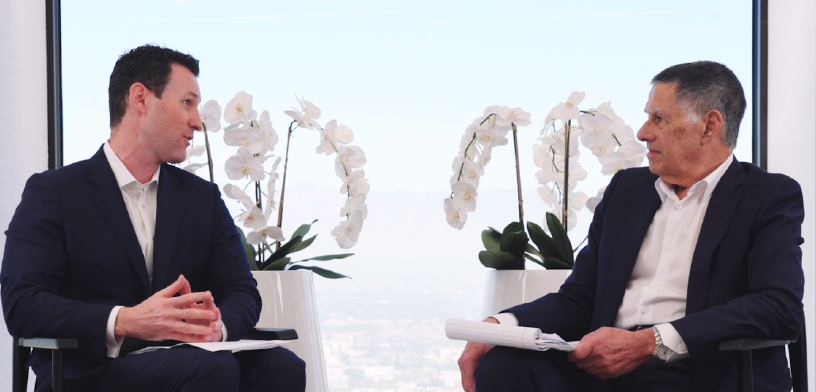
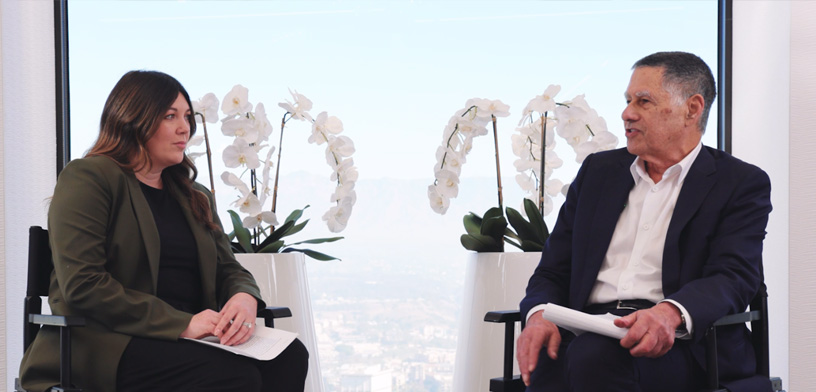
Jay Butterfield: Hello, and welcome to another installment of ARA In Conversation. I’m Jay Butterfield, and I have with me Sabrina Unger, ARA’s Head of Research and Strategy. Sabrina, there’s a lot of conflicting headlines today about office. And what we’d like to do here is sort out fact from fiction. Taking from the big picture, is there anything good we can say about office?
Sabrina Unger: I think this will be a bit of a different answer than what I have given in the past, but I think there are some reasons to start to feel cautiously optimistic about developments happening in the office sector, though I say that with a bit of an asterisk next to it. What we’re seeing is the prime, Class A-plus buildings are continuing to see a really solid pattern of demand, and that’s finally starting to translate into at least asking rent growth. So that’s a positive. Solid demand, and at the same time now the supply pipeline is effectively shutting off. It’s very difficult to get financing for new office and with overall vacancies at the level they are, it’s much harder to justify new development. So we have a combination of factors where demand for the best-in-class buildings is solid, asking rent growth seems to be turning a corner, and we are anticipating much less new supply to compete with.
So overall, I would say that that is a combination that is generally better than what we might have seen two or three years ago. However, that’s not to say that there still aren’t some pains to be worked through, nor do we think we will get to long-term average vacancies or rent growth anytime soon in the aggregate. So, while there are some positives there, there are still some things to be worked through.
Jay, ultimately, the goal of a core or core-plus diversified fund is to offer appropriate risk-adjusted returns with the goal of beating a benchmark. If the benchmark is ODCE, for example, it feels difficult to be able to outperform a benchmark that’s heavily weighted towards sectors like industrial and residential by making investments in office.
Can you talk a little bit about some of the ongoing challenges that may prevent more core capital from being able to operate in the office space today?
JB: Well, one of them is the amount of capital you have to put aside for tenant improvements. Tenants are asking owners for more tenant improvements to make the space like they want it to be, and usually higher tenant improvement costs, you can translate those into longer-term leases, but today it’s different.
You could spend a hundred dollars per square foot or more in tenant improvements and not be able to get those longer terms, especially where there’s a lot of extra supply and tenants have a lot of choices. So, the time period for break-even is a lot longer, and that makes it more difficult to outperform.
SU: I think I had even seen a recent CBRE report that stated, even for the best-in-class buildings, tenant improvement allowances were up something close to 40% since 2019, and so while we are starting to see some positive base rent growth in that subsegment, it certainly hasn’t been to the magnitude of 40%. So that’s still very much a challenge when it comes to the math on new office deals.
JB: So is there anything from the macro level that you can allude to that would possibly change your view on the sector?
SU: I think we’re starting to see some things on the macro front that could be a positive for the further improvement of the office sector.
I think one of the things that everyone is watching for is a greater stabilization in the return to work, hybrid, work-from-home dynamic. I think we’re starting to see a lot more firms talk about their return-to-office policy and whether that stasis ends up being three days a week in the office or four days a week in the office, what investors are really looking for is clarity and conviction, and I think we are starting to get to that place.
On the macroeconomic front, historically, office demand has [been] highly correlated to both GDP and employment growth. We do think we are facing a macro environment where GDP growth could slow down, job growth could be constrained by limited labor availability. So ultimately, I think we’re going to have to continue to watch the direction of where labor and GDP growth goes to really have a stronger understanding of what that might mean for the office sector going forward.
So, given that backdrop, do you think there is an opportunity to be a contrarian in office? And if so, when is the right time? And is that sort of exclusively the playground of higher-returning strategies, or is there an opportunity for core somewhere in there?
JB: Well, there definitely has been a significant repricing in office over the last several years, and that lower basis might entice some early investors to return to the sector.
These are more likely to be higher risk-return profile investors, family office or high-net-worth individuals who have longer investment horizons and perhaps are total return oriented – they don’t have the need for cash flow that your typical institutional investor has.
For core investors to come back into the market, they look at this asset class as stable and income oriented, so it’s really three things are going to have to happen. First is redemption cues. Most ODCE funds have redemption cues in place, and while it’s a small percentage of the net asset value, it’s still a focus for most investment managers dealing with this, so that they’re oriented to creating liquidity without selling off the jewels and disadvantaging the majority of their investors who are perfectly comfortable staying in the fund. So, I think right now core managers and core investors are more capital-preservation oriented and not so focused on new investments.
The second is fundamentals really have to change. So, core capital is really the least-risky component of it, and yet office underwriting is still very risky, especially in situations where they’re facing downsizing of tenant demand and weak markets for leasing or with commodity space.
The third is the transactions situation has to get back closer to normal. Right now in office, if you don’t have to sell, you don’t sell. If you don’t have to buy, you don’t buy. And the product that is being put on the market is done so because there’s constraints, whether it’s vacancy issues, and lower income, or refinancing pressures. And with interest rates where they are today, it’s really hard to get new projects underway. Until more transactions of the type of asset that appeals to core investors start happening in a more stabilized market, it’s hard to see core investors being aggressive or net buyers of office at this time.
SU: So if I’m going to summarize what I think I heard you say: core buyers overall are not likely to be a major element in the office sector when it comes to transactions in the near term, just given some of the elements that continue to need to be worked through. And it’s likely that the office activity we may see will tend to be more of the sort of higher returning, higher risk tolerance capital that may be leaning into some of the things that are happening in that space.
Jay Butterfield: That’s right.
SU: Jay, I want to thank you for taking the time to discuss a topic that is no doubt at the top of mind for many of our investors, and I’m sure they will be looking forward to more conversations on this exact topic. Thank you.
This transcript of the ARA In Conversation discussion has been edited for clarity.
Disclaimer
The information in this video is as of March 1, 2025, unless specified otherwise and is for your informational and educational purposes only, is not intended to be relied in to make any investment decisions, and is neither an offer to sell nor a solicitation of an offer to buy any securities or financial instruments in any jurisdiction. This presentation expresses the views of American Realty Advisors, LLC (ARA) as of the date indicated and such views are subject to change without notice. The information in this video has been obtained or derived from sources believed by ARA to be reliable but ARA does not represent that this information is accurate or complete and has not independently verified the accuracy or completeness of such information or assumptions on which such information is based. Models used in any analysis may be proprietary, making the results difficult for any third party to reproduce. Past performance of any kind referenced in the information above in connection with any particular strategy should not be taken as an indicator of future results of such strategies. It is important to understand that investments of the type referenced in the information pose the potential for loss of capital over any time period. This video is proprietary to ARA and may not be copied, reproduced, republished, or posted in whole or in part, in any form and may not be circulated or redelivered to any person without the prior written consent of ARA.
Forward-Looking Statements
This video contains forward-looking statements within the meaning of federal securities laws. Forward-looking statements are statements that do not represent historical facts and are based on our beliefs, assumptions made by us, and information currently available to us. Forward-looking statements in this video are based on our current expectations as of the date of this presentation, which could change or not materialize as expected. Actual results may differ materially due to a variety of uncertainties and risk factors. Except as required by law, ARA assumes no obligation to update any such forward-looking statements.
Explore More Insights
- 11:58
- 13:04
- 10:43
- 11:58
- 13:04
- 10:43