
In Conversation: From Past Cycles to Present Opportunities
ARA’s Sabrina Unger and Stanley Iezman draw on decades of market expertise to uncover actionable lessons from previous real estate cycles, offering fresh perspectives on today’s opportunities and risks. They explore how factors like capital flows, supply-demand imbalances, and investor sentiment have shaped past outcomes—and what that could mean for navigating the current landscape.
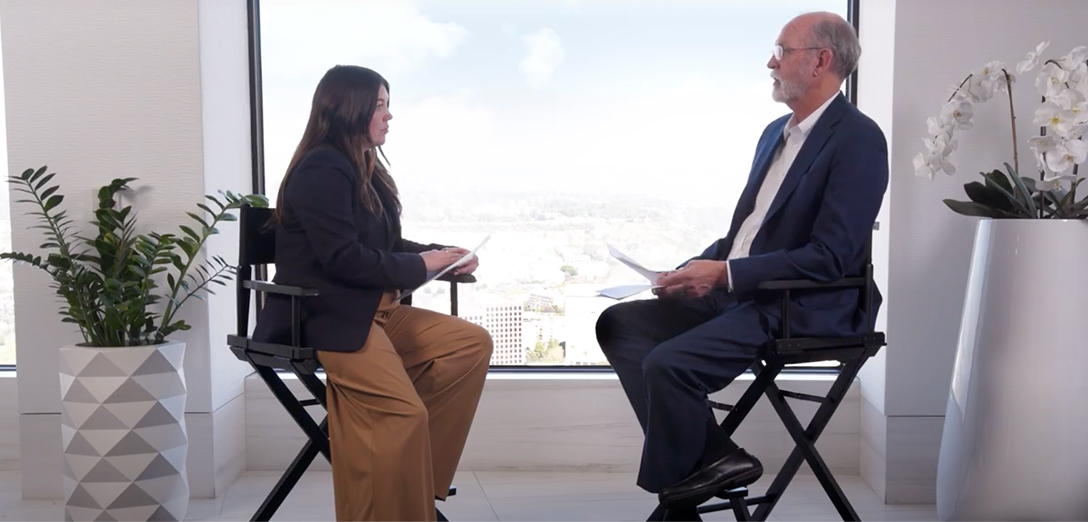
Sabrina Unger: Hello, and welcome to another installment of ARA In Conversation. I’m Sabrina Unger, Managing Director and Head of Research and Strategy for the firm, and I’m joined today by Stanley Iezman, our Chairman and CEO. Back in 2024, our research started to identify some of the early indicators that we believe constitute the beginning of a new real estate cycle.
Many investors will look to season fund managers who are cycle-tested that have experience from the past to be able to translate that to the present. And so, Stanley, I want to start out the conversation today by asking you to share with us just one or two of your biggest lessons that you are bringing in from the past cycle.
Stanley Iezman: Only one or two…That’s a great question and I think that first of all, you want somebody, when you mentioned the idea that seasoned real estate teams, what you want is somebody with a steady hand on the tiller who’s been through it and is not going to panic and doesn’t look at where the environment is and twist around because the winds are blowing in multiple different directions. I think that one of the several biggest lessons that I’ve seen over the last four cycles that I’ve been in is the fact that we misunderstood risk, we misunderstood credit, we misunderstood the flows of capital, and did not really, truly appreciate the fact that capital flows or lack of capital flows were really driving a large part of the value of real estate or all asset classes.
Now you always have a conversation with me about durability of demand, and you always say that demand is important. And yes, durability of tenant demand is critical to drive value, but at the end of the day, capital is going to determine whether that asset is going to go up in value or not, and people are either buying or not buying into it.
So I think that the super cycle of debt; the fact that the Fed reduced interest rates and then all of a sudden everybody was buying based on that – that reduced interest rate; it creates disincentives to fundamentally look at operations and look at that durability demand. And what we become is momentum players.
And it’s okay to be a momentum player, but when you’re thinking about this from an investor standpoint – we’re investors, we’re not gamblers and we’re not momentum players.
SU: So then based on that, how has your perspective on risk shifted over multiple market cycles?
SI: I think that there is multiple levels of risk. I think in today’s environment, probably the biggest risk that we face is not taking action. We have capital and inaction. In a world where you don’t know exactly where the market is going is probably the biggest risk that we need to understand. I know that when we sit down in Investment Committee, we’re always looking for where the holes are in the investment, rather where the opportunity is, and I think that that sort of dissuades you from investing. Particularly when you’re unsure of how policy changes are going to impact the long-term performance of real estate, so I think risk is being repriced. And as the market is changing today, and the reason I say the market is changing, is I think we’re entering a new world of technology that is going to impact everything that we’re doing in a very large and vociferous manner. And we don’t even understand the specific direction of what that really looks like. I think when we’re looking at the word salads out there, what is a hyperscaler, and what are data centers, and we’re going to be talking about that. It’s a new dynamic in terms of investing you have to learn it and spend time and I think trying to figure out what these opportunities are, are critical. So I think that’s a big risk.
SU: So then let’s shift that conversation to talk about the environment today. You said that maybe one of the risks is not making any moves in today’s environment. So where are you seeing some of the best opportunities?
SI: It’s interesting, over the last three months, four months, five months, we’re seeing a complete opening up of the floodgates of debt. So the banks and the financial institutions and debt funds massive flows of capital coming in. I mean, the numbers are just staggering in terms of the availability of cash. They’re much more competitive. The spreads are narrowing dramatically. That implies that the animal spirits are being lifted up. People are seeing the opportunities. Now the question is, your question is the right one. What are the opportunities that are out there and where do we see those opportunities? And I think today the biggest opportunity is really looking at the fact that we’re being able to buy real estate at below replacement cost. I think that is a fundamental benchmark. Now, that doesn’t necessarily mean that’s the right decision. Because you can buy property below replacement costs that’s in Death Valley that nobody else would necessarily want to lease. But when you couple that with your comment about durability of demand, I think if you’re able to buy assets at below replacement costs, you’re going to get generational assets and generational wealth. You’re starting to see that happening with new transactions, even in office. I mean the conversation today about office is now much more expansive. It’s not that people are just, “office interested” they’re now actually buying office and thinking about office.
SU: I think to that point, what types of office they’re buying is a very targeted subset, and that’s something that we’ve been talking about quite a bit over the last 18 to 24 months, probably longer, which is this idea of being able to isolate specific opportunities sort of against the headline narrative. And I think about coming out of the global financial crisis, if you were overweight in a portfolio to industrial and multifamily, you were likely to outperform. So making a sector allocation was sort of good enough for a period of time, and then it came down to which regions you overweighted. So if you overweighted the Sunbelt and you underweighted the Midwest, again, your performance looked pretty good. And then in the pandemic period, it probably came more down to market selection. But today, when we sort of look at unlevered expectations for total returns at a property sector level, they all seem to be sort of converging around the same level. And so our ability to get down into the individual sub-markets, micro locations, assets that are going to outperform that sort of generalized midpoint, I think is going to be incredibly important and I think that that’s something that’s slightly different in today’s cycle than perhaps what we’ve seen in past early stages of cycles, whereas in the past early cycle, the win area was sort of a barn door, and now the target is considerably smaller in terms of the strike zone. So maybe that poses the next question to you, which is, what do you think is different about this cycle than in past cycles?
SI: I think that the value proposition has changed radically. I think that markets now are being highly segmented, as you just talked about. Submarket sectors are being highly segmented, and I think that we as investors have to look into the idea that parabolic recoveries really do exist, and you don’t know when they’re going to come about and when you read about them in the Wall Street Journal, it’s too late. You have to buy into the belief that you think that those markets are there, even though research may not be able to support it. In other words, if you think about, you know, two years ago you couldn’t give San Francisco away today it’s booming. There is all sorts of space that are being taken down, and if you are able to buy properties in San Francisco, for example, at well below replacement costs, irreplaceable assets that you can’t get particularly in supply constrained markets, then you have an opportunity to really add value to the property and to take advantage of that upswing.
And I think that that occurs in several markets around the United States. Now we’re sitting in downtown Los Angeles, we’re looking out our window, and we’re looking at a lot of zombie buildings around here. And the question is that we’re sitting around debating with ourselves is, is this the right time to enter the office market in Los Angeles?
And I would pause that the answer is no today. I would suggest that there are better alternatives to be able to do it. So you, your comment about sub-sector, sub-market selection I think is crucial.
SU: Yeah, and you know, I think the other part of it is that using the office example, in the past cycle you’ve been sort of looking for cyclical indicators, but now we’re also dealing with some structurally different demand drivers that are impacted by, you know, return to work dynamics, work from home, hybrid, and now the impact of AI and what that all means for office using job growth. So there’s a lot of other structural things that we also have to keep in mind beyond just sort of the cyclical momentum of a sector, for example.
Can we ask you maybe to share an example of a strategy or a decision that you made in past cycles that you found to be beneficial and how that might be influencing today how you think about the environment?
SI: The big macro call, I probably think the most important one was moving very quickly into industrial. Looking at that was in about 2014-15 when we saw the dynamics of e-commerce really driving up. Now that was a call based upon the idea that e-commerce was growing at an exponential rate, but we did not necessarily appreciate the fact that it required so much logistical support behind it in order to be able to do it. So moving into industrial I think was a very big move. Concurrently, I think the other move that we made was moving away from office. And office, really, if you think about it, it’s a timing market. It’s a timing play. You’ve got to be able to enter when prices are low, because if you’re buying at retail, you’re basically buying it as you know, you’re buying at the cash flow based upon the movement upwards in rent, and is that really sustainable for a very long period of time?
And I think that investors, if they look at the cyclical trends in office, will suggest to you that it’s better to buy at a down cycle than an up cycle.
SU: So final question, let’s move forward and look into the future. Thinking about the current generation of young real estate professionals who maybe haven’t been through a cyclical reset, haven’t been through a recovery, but want to best position themselves for their careers as we enter this new cycle.
What advice might you give them?
SI: Before I get into the advice component of this, I want to make one comment about everything that we’re talking about, and I think it’s really important, and that is, is that fundamentals matter. Underwriting based upon fundamentals is really going to be a determining factor of being able to perform.
Fundamentals include tenant relations. You know the tenants that require the work that’s being done in the property. It identifies doing capital improvements of the property. It requires you to understand how to be able to position the property on an ongoing basis with the tenants to be able to maximize the rent. And I think too often when we buy a piece of property, we sort of assume that our pro forma is based upon a passive investment. And it is anything but passive, whether it’s a core strategy, value add strategy, or an opportunistic strategy. Active management does matter. Now, is it going to add 500 basis points? No, and I’m not suggesting it would. What I’m suggesting is it is going to make the determining factor between whether you are going to get a mediocre return or an above average return. And I think that those fundamentals are critical to be able to drill into and understand as both a young asset manager and an acquisition person, and somebody entering the business. So going to the fundamental question that you ask is, what guidance would I say, think about fundamentals, understand what those fundamentals mean, leasing management, design, accounting, legal, all of those things that you don’t think are necessarily part of what it is to own a property are going to be the factors that are going to determine whether your business is going to, and each individual asset, is a business is going to be successful or not.
SU: Well, Stanley, I want to thank you for sharing the conversation and your wisdom with us. I’m sure a lot of our listeners will really enjoy hearing all those insights.
SI: Thank you, Sabrina. Appreciate it.
This transcript of the ARA In Conversation discussion has been edited for clarity.
Disclaimer
The information in this video is as of November 7, 2025, unless specified otherwise and is for your informational and educational purposes only, is not intended to be relied in to make any investment decisions, and is neither an offer to sell nor a solicitation of an offer to buy any securities or financial instruments in any jurisdiction. This presentation expresses the views of American Realty Advisors, LLC (ARA) as of the date indicated and such views are subject to change without notice. The information in this video has been obtained or derived from sources believed by ARA to be reliable but ARA does not represent that this information is accurate or complete and has not independently verified the accuracy or completeness of such information or assumptions on which such information is based. Models used in any analysis may be proprietary, making the results difficult for any third party to reproduce. Past performance of any kind referenced in the information above in connection with any particular strategy should not be taken as an indicator of future results of such strategies. It is important to understand that investments of the type referenced in the information pose the potential for loss of capital over any time period. This video is proprietary to ARA and may not be copied, reproduced, republished, or posted in whole or in part, in any form and may not be circulated or redelivered to any person without the prior written consent of ARA.
Forward-Looking Statements
This video contains forward-looking statements within the meaning of federal securities laws. Forward-looking statements are statements that do not represent historical facts and are based on our beliefs, assumptions made by us, and information currently available to us. Forward-looking statements in this video are based on our current expectations as of the date of this presentation, which could change or not materialize as expected. Actual results may differ materially due to a variety of uncertainties and risk factors. Except as required by law, ARA assumes no obligation to update any such forward-looking statements.
Explore More Insights
- 9:02
- 10:43
- 7:20
- 9:02
- 10:43
- 7:20