
In Conversation: Active Asset Management
While some view real estate as a hands-off asset class, at ARA we see active management as essential for maximizing returns and mitigating risks. Stanley Iezman and Eric Cannon discuss how day-to-day operational oversight—such as optimizing leasing strategies, making targeted capital investments, and timing buy-sell transactions—directly impact property performance and investor returns.
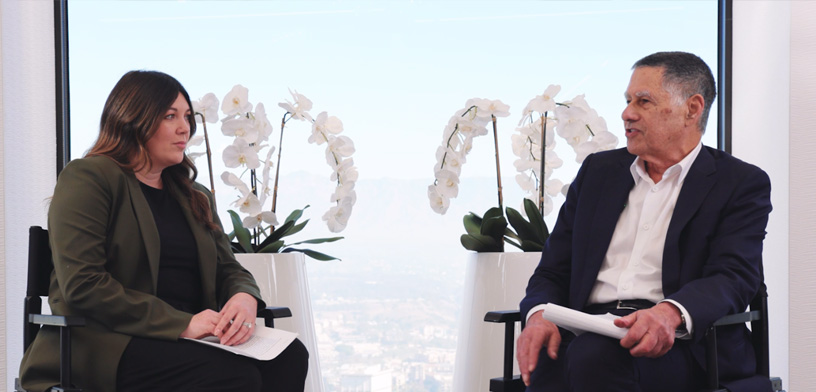
Stanley Iezman: Hello, my name is Stanley Iezman and I’m the Chairman and CEO of American Realty Advisors. Joining me today is Eric Cannon, our Managing Director and Deputy Portfolio Manager. What we’re going to be talking about today is the role of active asset management in the creation of value in connection with the real estate portfolios that we manage.
Now, Eric, what we do know in real estate is that sector selection, market selection, and submarket selection really are significant in terms of being able to develop durable portfolios that are going to be able to outperform. One of the things that we really don’t talk about, because it’s not necessarily sexy and exciting, is the issue of asset management and being proactive at asset management.
So why don’t you talk to us in your mind, what that means?
Eric Cannon: It’s really a mindset here at ARA, it permeates everything about our culture from the top down, as you know, being hands-on and involved in the day-to-day asset management. I think we define it best by what it isn’t; and it’s not simply buying a property, investing in an asset, setting the investment thesis and the business plan, and letting it operate on cruise control. It’s not deferring to our third-party property managers and leasing agents, or in the case of development, development partners to run the day-to-day management of it.
It really is a continuous process for us. It’s something that we’re involved in daily. It’s understanding the competitive positioning of our asset, structuring leases to respond to shifting market dynamics, managing expenses as efficiently as we can to drive maximum cash flow, and then ultimately, importantly, exiting at an opportune time.
SI: How do you think that really adds value in the overall scheme of things? Give me some examples of that.
EC: Sure. When you proactively get out in front of potential issues on an asset management basis, you can ensure that your cash flow is stable and growing. An example of that would be, let’s say our Research and Strategy group identifies a market or sub-market where we think two to three years from now, fundamentals are going to be challenged in that submarket. If we own an industrial property in that submarket and have a tenant that has a lease expiring around that timeframe, we’re going to be proactively engaging in renewal discussions now, years in advance to try to mitigate any potential negotiation during a soft period in the market.
And there’s a flip side to that as well, and that is capturing an opportunity – when a market might be soft, we’re not looking to really enter into or lock in long-term leases. So an example of that in real time would be a particular industrial submarket in a sunbelt market that has a lot of competition right now, where we’re negotiating a letter of intent and we’re actually going to do a shorter-term lease. We don’t want to lock in today’s rental rates because as you look out two to three years, it’s clear that the market is going to be in a stronger position than it is today. We want to provide a mark-to-market opportunity for either ourselves or the next buyer, ultimately that will maximize value.
SI: So how do you integrate this in the connection with the context of the lease duration and debt strategies and maximizing the value of both? Give me some examples of that.
EC: In our value-added strategy, we have a very actively managed debt program. It’s all individual property-level secured financing, and we look very closely at the underwriting in terms of our projected hold period, in terms of the projected cash flow profile of the investment, and we want to match the duration of our debt, the type of debt we use, and the amount, importantly, the amount of debt we use to mitigate risk. Where we are doing development in a risk mitigated manner, meaning we come in and we’re commencing construction right away, if it’s a speculative industrial development, for example, we may not use any debt at all because the cost of that debt is not nearly as attractive as it is when you get cash flow in place. So we’ve done that in the portfolios where once we start to get leasing, we’ll then look to finance the asset in a more attractive manner, and at that point you can easily service your debt.
SI: If I vaguely remember correctly, we just had an investment over the last week or two that we were just talking about doing that. So what was the rationale behind that?
EC: One of the things we saw during this past rate hike, cycle driven downturn was that developments that were taking longer to lease up than originally underwritten – what was really increasing your cost basis was the interest carry associated with the construction loans. So if you can underwrite to total returns on an unlevered basis that meet our targeted returns for our value-added or our core strategy, and you can do it without using leverage, you really have more staying power and you’re not worried about interest carry adding to your cost basis, you’re not worried about running out of interest reserve and having to rebalance it and deal with lender negotiations. So it’s this approach to how do we mitigate risk and meet our return objectives at the same time.
SI: That’s a great conversation, which we should probably dig into longer, not necessarily talking about active asset management, but I do want to touch upon it. Talk a little bit about data and technology, because it’s becoming much more an important part of the world today, and people are talking about it everywhere you turn. I don’t know what you call it today, the super seven stocks, Nvidia – I mean, when you look at those going forward returns and you think about what the value is, that assumes that data and technology is going to have a big impact. How do you think it’s going to impact us as a real estate investment firm, and how do you think it’s going to impact the users, and how should we as an asset manager think about that?
EC: It’s already starting to impact our entire industry, and I think it still remains to be seen – this is evolving as you know. Really the last couple of years have been all about data aggregation and collection, and the next few years and what we’re dealing with now is how do we take that data we’ve aggregated, collected, and how do we synthesize it, analyze it, and ultimately have it drive our investment decision making? We view it as a tool to help us make more informed decisions. I don’t think in our industry it’s going to be particularly prudent to make decisions solely based on the output of the data in terms of what it’s telling you. We’ve seen that in other asset classes like equities where you have these quantitative computer-driven firms that are not making the decisions themselves, and we’ve seen how it ends in a lot of cases with blowups and whatnot. Ultimately, it’s about having the resources to make smarter decisions faster in managing the portfolios, and that’s in terms of new investments, it’s looking at the performance using technology to benchmark our expenses, monitor tenant credit, get ahead of any potential issues to insulate cash flows in the portfolios.
SI: So that sort of looks like it’s risk – you’re trying to mitigate against risk in the portfolio. So why don’t you talk about risk mitigation and how you think about risk in creating value in the portfolio.
EC: Sure. It’s a big component of what we do in active asset management on a hands-on basis. I think that it’s a key differentiator of our firm. I think a lot of our competition view their role to be involved in the higher-level strategic decisions of: What do I invest in? How do I invest in it? When do I sell? How do I finance or refinance? Do I do a very large lease? How do we drive day-to-day operational value at the asset level? And it’s really managing each individual property as if it’s an operating business, understanding all the components of revenue, all the components of expenses, and then importantly, where we’re investing cap-backs and capital improvements, really making sure that we’re going to earn a return on investment.
So in our multifamily communities, for example, we’re not just going to go in and renovate a collection of 15 to 20 individual apartment units on the basis that we’re going to achieve a certain premium for those renovations. We’re going to take two or three units, we’re going to test out different finishes before we move forward with a plan to ensure that we earn that return on capital.
SI: So, we’re talking about active asset management. Is that something that is learned or is it taught? Do you think it’s intuitive to a new person coming into the real estate business or do you think it’s something that you can teach somebody to do?
EC: I think it’s best taught. Training, mentoring individuals. You teach real estate in the master’s program at USC, and there are things that in your day job come up every single day that you never read about in an academic book or talked about in a lecture and so I do think it’s more about on-the-job training, learning.
Ultimately, the culture that our senior management team has set and is a key part of our investment philosophy—being active asset management—is what creates value for our investors. You started out by saying it: when you go to industry conferences what does everyone in our industry talk about? The new investments they’re making, what they’re buying, what they’re developing. You don’t often hear them talking about how they’re driving cash flow growth within their portfolios. You also don’t hear them talk about well-timed exits and disposition strategies, which we are very hands on in evaluating on a continuous basis, not an annual wholesale plan or quarterly but every day in our markets if there’s an opportunity to sell to a user at a premium, an industrial property, for example, that they might want to occupy, we’ll capitalize on that. If there’s an opportunity to sell to an investor before we’ve actually reached stabilization because they have a view on the go-forward underwriting that we think is more aggressive than reality, we’re happy to realize those returns and move on. Whereas, most of our competitors want to set a business plan, see that business plan through to completion and stabilization, and then sell.
SI: It’s interesting when you’re talking about this, because as we talk about in our investment committee all the time, every day you don’t sell, you’re making a buy decision. You’ve repurchased the property. I guess the conclusion of all this is that an asset manager needs to be very nimble, aware, and think about strategy outside of the box. In other words, you have to be in the market, talking to people, understanding what people are doing, and understand where markets are pivoting.
EC: Absolutely.
SI: Thank you, Eric. I appreciate you, this is a terrific conversation.
EC: Thank you for having me.
This transcript of the ARA In Conversation discussion has been edited for clarity.
Disclaimer
The information in this video is as of November 7, 2025, unless specified otherwise and is for your informational and educational purposes only, is not intended to be relied on to make any investment decisions, and is neither an offer to sell nor a solicitation of an offer to buy any securities or financial instruments in any jurisdiction. This presentation expresses the views of American Realty Advisors, LLC (ARA) as of the date indicated and such views are subject to change without notice. The information in this video has been obtained or derived from sources believed by ARA to be reliable but ARA does not represent that this information is accurate or complete and has not independently verified the accuracy or completeness of such information or assumptions on which such information is based. Models used in any analysis may be proprietary, making the results difficult for any third party to reproduce. Past performance of any kind referenced in the information above in connection with any particular strategy should not be taken as an indicator of future results of such strategies. It is important to understand that investments of the type referenced in the information pose the potential for loss of capital over any time period. This video is proprietary to ARA and may not be copied, reproduced, republished, or posted in whole or in part, in any form and may not be circulated or redelivered to any person without the prior written consent of ARA.
Forward-Looking Statements
This video contains forward-looking statements within the meaning of federal securities laws. Forward-looking statements are statements that do not represent historical facts and are based on our beliefs, assumptions made by us, and information currently available to us. Forward-looking statements in this video are based on our current expectations as of the date of this presentation, which could change or not materialize as expected. Actual results may differ materially due to a variety of uncertainties and risk factors. Except as required by law, ARA assumes no obligation to update any such forward-looking statements.
Explore More Insights

- 9:02
- 13:04
- 10:43
- 9:02
- 13:04
- 10:43